|
I dedicate this recital in memory of
a true hero, my captain - Russell Sherman.
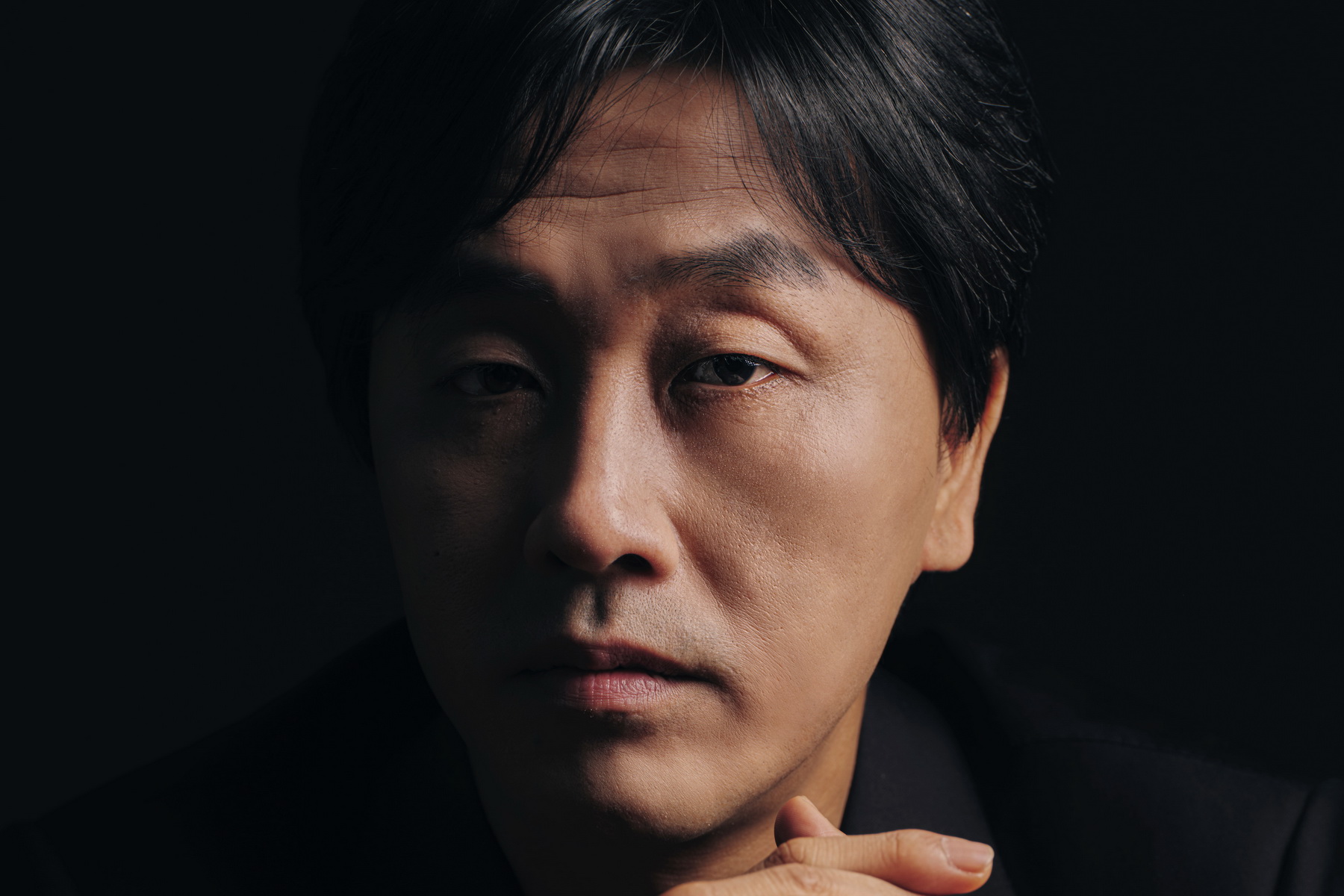
Minsoo Sohn
~ Program
~
Franz Liszt
(1811-1886)
Consolations,
S.172
Consolation No. 1 in E major: Andante con moto
Consolation No. 2 in E major: Un poco più mosso
Consolation No. 3 in D-flat major: lento placido
Consolation No. 4 in E major: Quasi Adagio
Consolation No. 5 in E major: Andantino
Consolation No. 6: Allegretto sempre cantabile
~
intermission
~
Franz Liszt
(1811-1886)
Transcendental Études, S.139
Etude No. 1 in C Major, "Prelude"
Etude No. 2 in A Minor
Etude No. 3 in F Major, "Paysage" (Landscape)
Etude No. 4 in D Minor, "Mazeppa"
Etude No. 5 in B-flat Major, "Feux follets" (Will-o’-the-wisps)
Etude No. 6 in G Minor, "Vision"
Etude No. 7 in E-flat Major, "Eroica"
Etude No. 8 in C Minor, "Wilde Jagd" (Wild hunt)
Etude No. 9 in A-flat Major, "Ricordanza" (Remembrance)
Etude No. 10 in F Minor
Etude No. 11 in D-flat Major, "Harmonies du soir" (Evening harmonies)
Etude No. 12 in B-flat Minor, "Chasse-neige" (Blizzard)

Minsoo
Sohn gave stunning accounts of Liszt’s
Consolations and Transcendental at Jordan Hall
on Friday. Minsoo’s mastery is evident, his
playing nuanced, his dynamic control exquisite,
his shaping of phrases clear, the use of rubato
thoughtful. Wha Kyang Byun, brilliant pianist
and instructor, was Minsoo’s teacher for 12
years at NEC. She described (Liszt’s
Transcendental) etudes as Mount Everest. Playing
all of them at once is a Herculean effort,
requiring not only physical endurance, but the
mental challenge of keeping one’s concentration
for one hour and five minutes of brutally
difficult repertoire. The late Russell Sherman,
to whose remembrance this recital was dedicated,
was married to Wha Kyung Byun and his 1976
recording of these etudes is just amazing, and
obviously influenced Minsoo’s performance. And
just as Russell Sherman passed the baton of the
Liszt etudes to Minsoo, so Minsoo passed it to
his pupil Yunchan (Lim), who recorded the etudes
live in Ft. Worth in 2022.
-Boston Musical
Intelligencer
|
|
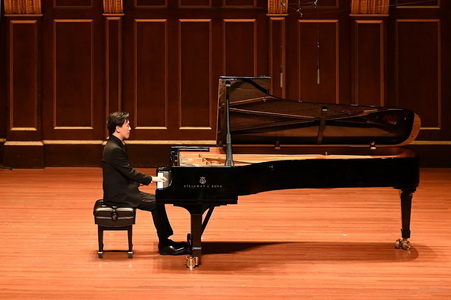
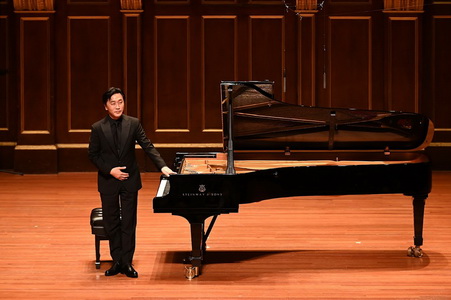
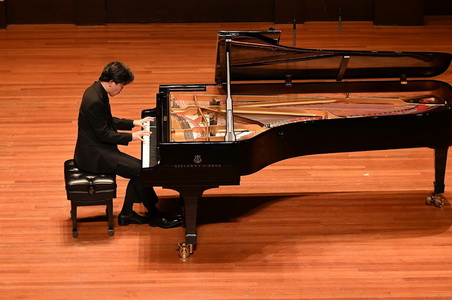
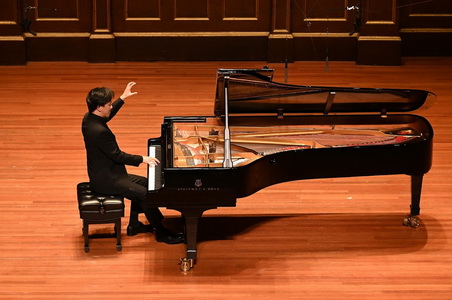
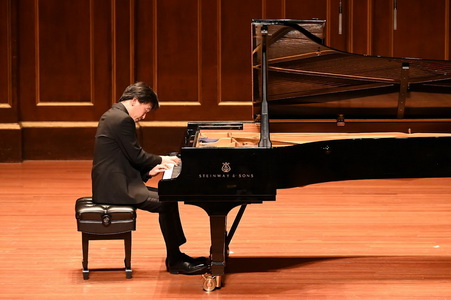
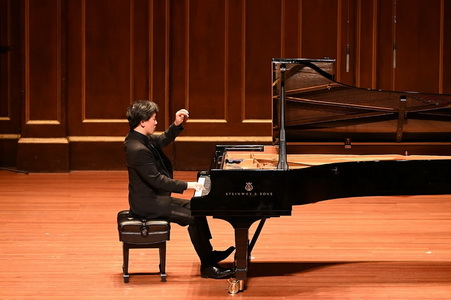
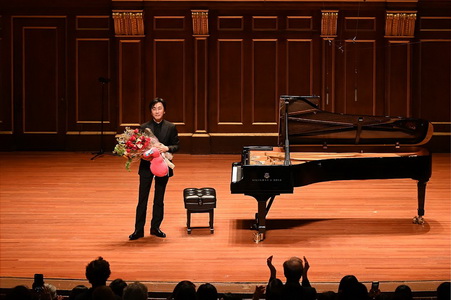



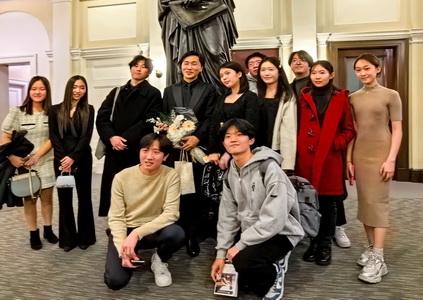
photos: Chung Cheng
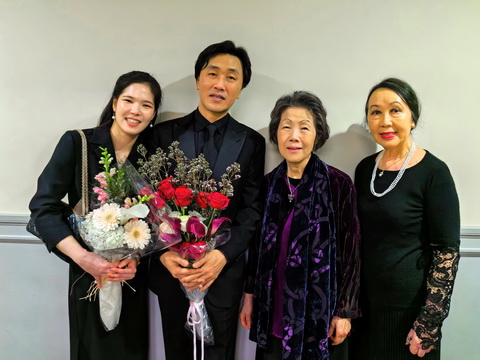
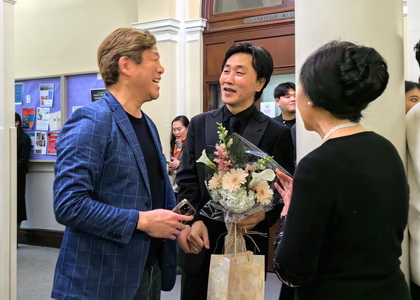
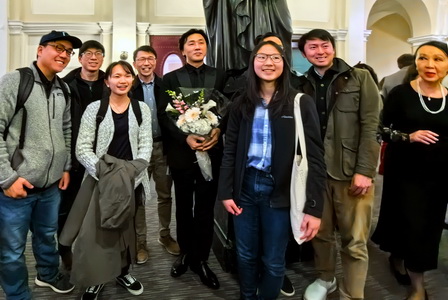
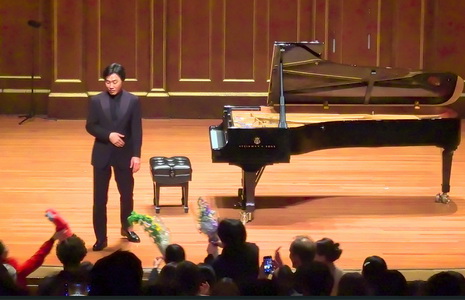
photos: Chutze Chou
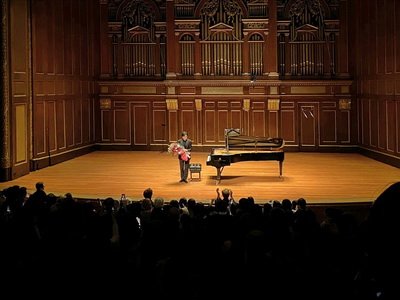
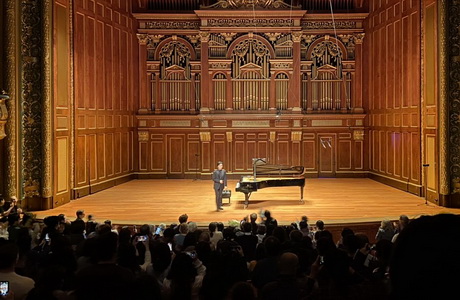
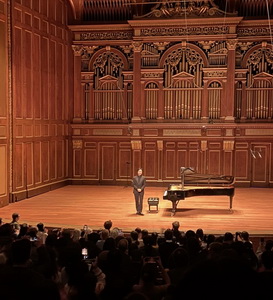

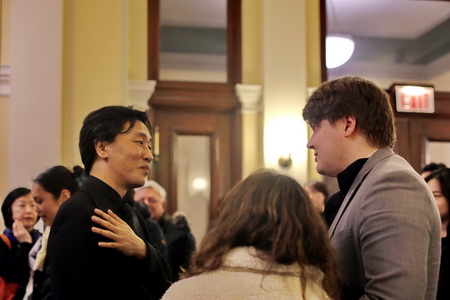
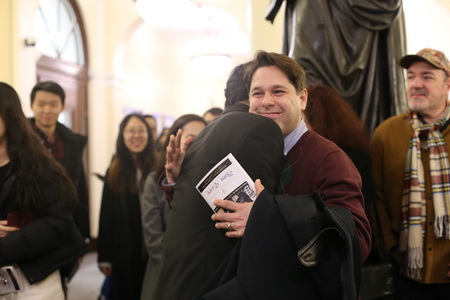
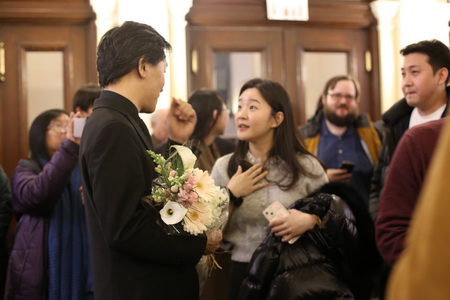
event photos: Xiaopei Xu and Chi Wei Lo
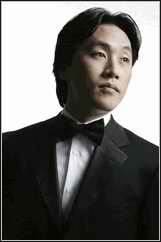
Minsoo Sohn,
piano
https://minsoosohn.com/
 "A genuine artist,
with a thoughtfully conceived and poetic interpretation." –
New York Times "A genuine artist,
with a thoughtfully conceived and poetic interpretation." –
New York Times
Sohn plays with a thrilling, personal, hall-filling sound that is
also flexible, vocal,
and immediate; he was born to play the piano. One can feel
absolutely certain that Sohn is an artist, a man who will create
life in music, find listeners, and reward them. – Boston
Globe
Mr. Sohn illuminated here with a thoughtfully conceived and poetic
interpretation, enhanced by tasteful ornamentation. Mr. Sohn’s crisp
articulation rendered the fast, virtuosic numbers a delight, and he
imbued the slower sections with an appealing intimacy. – New
York Times
Sohn tosses off the fearsome technical challenges without breaking
stride while at the same time elegantly colouring each mood. –
Toronto star
These were deeply considered, tightly knit performances in which
every bar seamlessly followed another and also filled its right
place in the whole. It is virtually impossible to pick his
interpretations apart, point to details, it all seemed consequent
and inevitable…His performance stood out for its steady pace and
progression, its splendid clarity and consistency of tone, and the
elegance of the melodic lines. Playing a modern instrument in the
same way he played the Webern and the Brahms, he was able, as I
mentioned above, to do justice to modern technique and the Baroque
origins of the music. Sohn’s approach was so free from mannerisms
and so well integrated. In its rigor, elegance, and integrity,
Minsoo Sohn’s interpretation is the most satisfying I have heard in
recent years. – New York Arts
Minsoo
Sohn is a Korean American pianist known for his musical intelligence
and masterful virtuosity. Described by the New York Times as "a
genuine artist, with a thoughtful and poetic interpretation" and the
Boston Globe as "born to play the piano," Sohn continues to expand
his reputation as one of the foremost pianists of his day. Sohn has
toured extensively throughout North and South America, Europe,
Israel and Korea and has appeared in important venues and festivals.
Sohn is particularly noted for his interpretation of Bach’s Goldberg
Variations, and the New York Times praised his Honens-label
recording of the work as a "beautifully articulated, radiant
interpretation," placing it one of the top classical recordings of
2011. His recordings also received critical acclaim by New Yorker
Magazine, Plain Dealer, Gramophone, Calgary Herald and Toronto Star
among others.
In 2020, coinciding with the 250th anniversary of Beethoven’s birth,
Mr. Sohn concluded his four year immersion in the composer’s music,
which has included concert series, recordings and writings. Over the
course of his Beethoven project, Mr. Sohn performed and recorded the
composer’s thirty-two sonatas in series of recitals at Seoul Arts
Center and recording sessions at Tongyeong Concert Hall. The recital
series also included Beethoven’s monumental Diabelli Variations and
Bagatelles. The Sony Classical released the highly anticipated
nine-album set of "Complete Beethoven Piano Sonatas" in the Fall of
2020.
He held positions at Michigan State University and Korean National
University of Arts before joining his alma mater, New England
Conservatory, in Fall 2023.
He is indebted to Russell Sherman and Wha Kyung Byun for guiding him
to follow his bliss.
NOTES ON THE PROGRAM
by Dr. Jannie Burdeti
Franz Liszt
(1811-1886)
Consolations,
S.172
Consolation No. 1 in E major:
Andante con moto
Consolation No. 2 in E major: Un poco più mosso
Consolation No. 3 in D-flat major: lento placido
Consolation No. 4 in E major: Quasi Adagio
Consolation No. 5 in E major: Andantino
Consolation No. 6: Allegretto sempre cantabile
"Franz Liszt carried a walking stick with the faces of St.
Francis of Assisi, Faust’s Gretchen, and Mephistopheles carved
on it. Apparently he longed for the Divine, craved women and
worldly pleasures, and was fascinated by the diabolical."
-Vladimir Feltsman
Franz Liszt lived a full life, to say the least. As an unrivaled
virtuoso, he achieved rock star status, popularized the solo
recital, and pushed the limits of piano playing to unimaginable
heights. He was also a philanthropist, taught free lessons to
thousands of students, and fulfilled his lifelong desire of
living a religious life (having first expressed his desire to
attend seminary at the age of seventeen) late in life, as an
abbé
in the Catholic Church. While this seemingly stark dichotomy is
certainly a gross generalization of his multifaceted life, it
was in the midst of the transition from one to the other, that
he composed between 1849 and 1850 his Consolations, also
known as Six
pensées poétiques or Six Poetic Thoughts. The first
version of these pieces were written between 1844 and 1849.
In 1847, at the age of 36, Liszt retired from the concert stage
at the peak of his pianistic powers to dedicate his energies to
composing. The following year, he took up a full-time position
as Kappellmeister in Weimar. Then, in 1849, his respected
colleague
Frédéric
Chopin died, and Liszt became very involved in his legacy and
compositions, to the extent of preparing a lengthy biographical
text on his life. His humble, yet deeply intimate
Consolations reflect his preoccupations of the time, and
Chopin’s influence can be heard as a backdrop in Liszt’s
writing.
Scholars have also suggested that these pieces may have been
inspired by either Charles Sainte-Beuve’s collection of poems
with the same name or Alphonse de Lamartine’s poem, Une larme,
ou Consolation. While E major pervades the set, a key that
Liszt often reserved for his religious pieces, he
self-effacingly wrote to his publisher describing the
Consolations as "six fantasy pieces [that] can provide
consolation for those benevolent pianists who have tortured
themselves with their other pieces."
Consolation No. 1 in E major,
Andante con moto
Lasting only twenty-five measures and less than one-and-a-half
minutes, this first
Consolation
paints a meditative, opening scene. It is written in a
string-quartet texture, and according to records from Liszt’s
master classes, should proceed to the second piece without a
break.
Consolation No. 2 in E major, Un poco più mosso
The pace picks up with a gentle melody that floats over an
undulating left-hand figuration. After a short interlude, the
melody returns but displaced in register, as is so common in
Liszt’s music.
Consolation No. 3 in D-flat major,
Lento placido
The most Chopinesque in this set and certainly the most often
performed, the third
Consolation
resembles Chopin’s Nocturne Op. 27, No. 2, in both key and
texture. Its mesmerizing three-part texture includes a low
resonating bass, a melancholic melody, and an arpeggiated
accompaniment in the middle.
Consolation No. 4 in D-flat major,
Quasi adagio
In some editions, this fourth
Consolation
is printed with a "guiding star." The melody in this piece, in
addition to the next, is taken from a song by the grand duchess
Maria Pavlovna of Save-Weimar-Eisenach. She was the sister of
Tsar Nicholas I of Russia, as well as Liszt’s patron and pupil.
In the same key as the preceding
Consolation,
this work is hymn-like, with a yearning melody.
Consolation No. 5 in E major,
Andantino
The first version of this piece dates back to 1844 and was
originally titled "Madrigal,’ with the inscription, "nessun
maggior" from Dante’s
Divine Comedy.
It refers to Dante’s quote, "There is no greater sorrow than to
recall in misery the time when we were happy." Returning to the
key of E major, it opens with a solo line and is marked,
con grazia,
or "with grace."
Consolation No. 6,
Allegretto sempre cantabile
To end the set, Liszt writes his longest and most technically
involved piece, complete with a short cadenza. An impassioned,
rhetorical melody is heard in the middle of harp-like chords.
The whole piece builds continuously in intensity until a climax
is reached; a quiet, consoling coda ensues.
Franz Liszt
(1811-1886)
Transcendental Études, S.139
Etude No. 1 in C Major, "Prelude"
Etude No. 2 in A Minor
Etude No. 3 in F Major, "Paysage" (Landscape)
Etude No. 4 in D Minor, "Mazeppa"
Etude No. 5 in B-flat Major, "Feux follets" (Will-o’-the-wisps)
Etude No. 6 in G Minor, "Vision"
Etude No. 7 in E-flat Major, "Eroica"
Etude No. 8 in C Minor, "Wilde Jagd" (Wild hunt)
Etude No. 9 in A-flat Major, "Ricordanza" (Remembrance)
Etude No. 10 in F Minor
Etude No. 11 in D-flat Major, "Harmonies du soir" (Evening
harmonies)
Etude No. 12 in B-flat Minor, "Chasse-neige" (Blizzard)
"Bach is the alpha and Liszt is the omega of piano playing." —Ferruccio
Busoni
To perform all of Franz Liszt’s Etudes d’execution
transcendante (literally "Studies of transcendent
execution") is to ascend one of the loftiest Himalayan summits
for pianists. The Oxford English Dictionary defines the
word transcendental as "going beyond the usual limits of
human knowledge, experience or reason." Perhaps more than any of
his predecessors, with the genre of the "etude" or "study,"
Liszt revolutionized piano technique to the point that it verged
on the superhuman, the supernatural, and the transcendental. The
Transcendental Etudes are transcendental not only in
their technical demands: as the title implies, the works also
achieve this distinction by way of their symphonic scope and
emotional intensity. And perhaps the true virtuoso transcends
the technical difficulties to bring the listener to the realms
beyond the physical—indeed, several titles refer to otherworldly
perceptions.
Wrought out over thirty years, these etudes were most likely
originally inspired by Liszt’s teacher, Carl Czerny. When Liszt
was ten, Czerny accepted him as a pupil. Czerny was not only a
former student of Beethoven but also a successful pedagogue and
prolific composer of etudes. In 1826, at fifteen, Liszt composed
his first large-scale work, Etudes for the Piano in
Forty-Eight Exercises, Op. 6 (of which twelve were
completed). There were two subsequent versions of these pieces—a
revision in 1838 and another in 1852. Liszt dedicated the first
and last sets to Czerny.
A major turning point in Liszt’s
life was attending a concert by the famous violinist Niccolò
Paganini in 1832. The impact of this concert on Liszt’s life was
profound. He wrote in a letter to a friend, "For a whole
fortnight my mind and my fingers have been working like two lost
souls. Homer, the Bible, Plato, Locke, Byron, Hugo, Lamartine,
Chateaubriand, Beethoven, Bach, Hummel, Mozart, Weber are all
around me. I study them, meditate on them, devour them with
fury; besides this, I practice four to five hours of exercises
(thirds, sixths, octaves, tremolos, repetition of notes,
cadenzas, etc.). Ah! provided I don’t go mad you will find in me an artist! . . . Your
friend, though insignificant and poor, cannot leave off
repeating those words of the great man ever since Paganini’s
last performance." His fire of ambition to become the Paganini
of the piano had been lit.
A few years later, at the age of twenty-six,
in 1837,
he rewrote his youthful etudes and infused into the twelve
pieces his new level of virtuosity, bringing them to the edge of
playability and, according to Rosen, "stretching what the human
hands can be made to do." Schumann, in a review, wrote, "These
are veritable studies of tempests and terrors, studies for at
most ten or twelve people in the whole world." Liszt published
them as the Twelve Great Studies for the Piano. (He
planned on doing twenty-four, which the original titled
reflected, but his plans never materialized). Eleven out of the
twelve etudes were directly based on the earlier versions, with
the twelfth etude based on his Impromptu on Themes of Rossini
and Sontini, Op. 3, also a much earlier work. The
transformation from the previous set was tremendous, and Liszt’s
personality shines through each one.
Rosen points out that while the first and second versions share
a lot in common, such as "harmonic structure, basic melodic line
and rhythmic organization, . . . Liszt was able to . . .
transform an uninteresting student’s effort into a radical work of
originality." Much of the transformation is due to Liszt’s use
of sonority and his "imaginative reconnection of the sound." He
created a final version of the etudes in 1851, essentially
removing unnecessary hardships and making them more suitable to
play, while retaining their transcendental virtuosity. Russell
Sherman once commented on this set, "There is a health and
vitality in the way he ropes together the public rhetoric, the
inner working of the musical form, the erotic impulse and the
feeling of generosity and religiosity."
Etude No. 1 in C Major, "Prelude"
Pianist Kirill Gerstein writes that this first etude, titled
"Prelude," is "a virtuosic trying-out of the piano." Lasting
less than a minute, the piece dashes back and forth on the
keyboard with arpeggios, chords, trills—all the different
exercises Liszt likely practiced as a budding virtuoso.
Etude No. 2 in A Minor
Busoni referred to this etude as "Fusées"
or "Rockets." The main theme is a repeated-note figure, made
capricious by its quick alternation between hands and daring
leaps. Perhaps more than any of the other etudes, this one
brings Paganini’s violinistic pyrotechnics to mind.
Etude No. 3 in F Major, "Paysage" (Landscape)
A contemplative depiction of how it might feel to view a vast
landscape, this etude is in the same key as Beethoven’s
Pastoral Symphony. Liszt creates layers of singing lines—at
times with only a single hand, at others with both. This piece
offers a welcome respite between the intense passion before and
after.
Etude No. 4 in D Minor, "Mazeppa"
In Ukraine, Ivan Mazepa, a seventeenth-century military leader,
inspired an entire genre of artistic, literary, and musical
works. The story goes that Mazepa, as punishment, was tied naked
to a wild horse. Liszt, in his etude, bases the story line on
Victor Hugo’s poem about the event. In Hugo’s retelling of the
legend, Liszt specialist Leslie Howard writes, "a Polish page
[is] bound to a wild horse which released him only when, having
galloped to Ukraine, it died from exhaustion." Liszt later also
composed a symphonic poem with the same name.
One of Liszt’s most innovative contributions to piano technique
in this work is his choice of fingering for the accompanimental
pattern in thirds. He uses, in fast succession, fingers two and
four to imitate the sounds of the galloping horse. The various
thematic transformations that this piece goes through showcase
Liszt’s different compositional and pianistic techniques.
Etude No. 5 in B-flat Major, "Feux follets" (Will-o’-the-wisps)
The title refers to the flickering, mystical lights that
travelers can see at dusk above stagnant bodies of water, which
legend attributes to spirits or ghosts. Looking beyond the
notoriously difficult technical aspect of this piece, one can
see how Liszt brilliantly depicts this otherworldly phenomenon
through his iridescent figurations and chromaticism.
Etude No. 6 in G Minor, "Vision"
Here, Liszt creates a dark and foreboding vision. Overtones of
the Dies irae theme are heard in the right hand. The
arpeggiated chorale grows and intensifies in ecstasy. The
tremolos and swells that appear near the conclusion bring to
mind the music of Wagner and Bruckner, and perhaps even
foreshadow some of the ecstatic writings of Scriabin.
Etude No. 7 in E-flat Major, "Eroica"
Sharing the same name and key with Beethoven’s Eroica
Symphony, this work is a heroic march. However, before the main
theme appears, the piece opens with a blazing cadenza-like
introduction. The march builds into thundering, double octaves
at its climax.
Etude No. 8 in C Minor, "Wilde Jagd" (Wild hunt)
Liszt illustrates a mad and reckless chase. This piece is not
about hunters in the forest chasing animals; rather, in keeping
with some versions of this German folktale (as implied by the
German title), this "wild hunt" describes ghost riders chasing
and abducting souls to bring to the underworld. According to
legend, during these rides, one can hear strains of beautiful
music.
Etude No. 9 in A-flat Major, "Ricordanza" (Remembrance)
Busoni described this etude as being "like a packet of yellow
love-letters." With its Italian appellation, it transports the
listener to a bygone era of singing lovers, sparkling
sentiments, and faded memories. The ingenious fifteen-year-old
Liszt composed this finest of melodies.
Etude No. 10 in F Minor
Other than the second etude, this is the only piece without a
title given by Liszt. Busoni names this one "Appassionata," and
perhaps uncoincidentally, Beethoven’s Appassionata Sonata
is also in F minor—and their codas have similarities. One of the
most-performed etudes of this set, its passionate and breathless
syncopations arrive at a climax with octave D-flats heard
twenty-three times in a row.
Etude No. 11 in D-flat Major, "Harmonies du soir" (Evening
harmonies)
Liszt touches upon the spiritually transcendent in the opening
of this exquisite tone poem. Gentle, distant bells, as chords
without their normal tonal functions, ring over what feels like
a timeless vista. The music swells, but before the grand climax
of the theme, a recitative ensues over "l’accompagnamento quasi
arpa" (accompaniment like a harp). Before the end, it returns to
a sudden repose. Rosen’s remark that Liszt’s "feeling for sound
was the greatest of any keyboard composers between Scarlatti and
Debussy" aptly describes this piece.
Etude No. 12 in B-flat Minor, "Chasse-neige" (Blizzard)
Busoni described this piece as "the noblest example, perhaps,
amongst all music of a poetizing nature—a sublime and steady
fall of snow which gradually buries landscape and people." One
can hear the gradual accumulation of snow and its many
movements: steady snowfall, gusts, and eventually, avalanches.
 March 2,2024
中華表演藝術基金會第35屆音樂季第3場音樂會,將於3月8日週五晚上八時,邀請韓國鋼琴名家
Minsoo Sohn
在紐英崙音樂學院喬登廳
(Jordan Hall)
舉行一場鋼琴獨奏會。曲目包括:李斯特的安慰曲
Consolations S. 172
和超凡練習曲 Transcendental Etudes S. 139。
票價為
$20 (7-13歲)、$40、$60。提供學生免費票(14歲以上),及非學生贈送卷。需事前預訂。6歲以下兒童請勿入場。詳情請在中華表演藝術基金會的官網查詢.
線上售票3月8日下午2時將關閉。現場門票售價為10美元,僅限現金支付。
Minsoo Sohn
高超的藝術才華與獨特的音樂詮釋,廣泛受到評論家和觀眾的讚賞。
《纽约时报》形容
他为
“
一位真正的艺术家,具有深思熟虑的理念和诗意的解释。”《波士顿环球报》赞扬他
“以令人激动、个人化、充满音响的方式演奏,富有弹性。他天生就是为钢琴而生。”
在紐約卡內基音樂廳
(Carnegie Hall)演奏後,紐約音樂會評論
(New York Concert Review)說:『…展現了鋼琴大師之風範….總能輕鬆的克服駕馭所有能夠想像以及難以想像的難度挑戰…親和的風格,自信純熟的技巧,勾畫優美的旋律,完整無缺的全面音樂呈現。』
Minsoo Sohn
三歲開始學習鋼琴。大學起就在波士頓新英格蘭音樂學院,習師於鋼琴大師羅素謝爾曼
(Russell Sherman)
和
Wha Kyung Byun。2004年他在英格蘭音樂學院取得最高藝術家文憑
(Artistic Diploma)。我们谨以这场音乐会来纪念几个月前逝世的Russell
Sherman
先生。
Minsoo Sohn
是2006年加拿大Honens
國際鋼琴大賽第一名獎。及克利夫蘭大賽
(Cleveland)
銀牌獎,Hilton
Head
一等獎,Busoni,
魯賓斯坦,
伊麗莎白女王,
和
Santander 等國際鋼琴大賽特等獎。
他已多次在北美、歐洲和以色列各種重要場地和節日慶典中表演。曾和多位知名指揮大師和樂團合作。2008
他出了首張唱片,多倫多星報(Toronto
Star)報導描述
“他優雅的,從容的騰躍過驚險的技術挑戰…”。
Minsoo Sohn
以其對巴赫的《哥德堡變奏曲》的詮釋而聞名,《紐約時報》稱讚他的錄音作品為「一個美麗而清晰的詮釋」,將其列為2011年最佳古典音樂錄音之一。
在2020年,正值貝多芬誕辰250周年之際,Minsoo
Sohn
在首爾藝術中心的一系列獨奏會,演奏並錄製了貝多芬的三十二首奏鳴曲。獨奏會系列還包括貝多芬巨著的《迪亞貝利變奏曲》和小品集
(Diabelli Variations and Bagatelles)。在2020年秋季發行了廣受期待的九張專輯組合《完整貝多芬鋼琴奏鳴曲集》(Complete
Beethoven Piano Sonatas)。
在2023
返回母校新英格蘭音樂學院任教之前,Minsoo
Sohn 曾在密歇根州立大學和韓國藝術大學任職。他的一位學生
Yunchan Lim
任奫燦
在2022年贏得了范克魯本
(Van Cliburn)
國際鋼琴比賽冠軍,成為該比賽有史以來最年輕的獲獎者
(18歲).
Yunchan Lim
正繼續跟隨
Minsoo Sohn
在新英格蘭音樂學院學習
。

|